Monday, 21 January 2013

Divergent by Veronica Roth

Plot (taken from waterstones.com)

She turns to face the future in a world that's falling apart. For sixteen-year-old Tris, the world changes in a heartbeat when she is forced to make a terrible choice. Turning her back on her family, Tris ventures out, alone, determined to find out where she truly belongs. Shocked by the brutality of her new life, Tris can trust no one. And yet she is drawn to a boy who seems to both threaten and protect her. The hardest choices may yet lie ahead...A debut novel that will leave you breathless.

Rating 5*- I do not think I will be able to express the amount of enjoyment and entertainment I had when I read this novel. I truly was breathless after finishing the first in the series. It has to be the best novel I have read (maybe excluding Harry Potter- but maybe that is overrated now). If you’re not one to read, the rights have been bought by Summit entertainment and will be released in 2014.

I cannot recommend this novel enough. The use of the different factions (Abnegation, Dauntless, Amity, Candor and Erudite) shows the way in which the society is split. “Faction before blood”, that is the motto and without your complete loyalty you will end factionless.

Tris is a fantastic character, written in the 1st person you see events from her point of view and her strength and willingness to fight is truly inspirational, in a society that may become reality.

Monday, 14 January 2013

Beebo Brinker by Ann Bannon

Plot (taken from waterstones.com)

Jack Mann finds Beebo Brinker (real name Betty Jean — she was unable to pronounce it as a child) wandering the streets of Greenwich Village. Beebo is 18 years old, tall and handsome, vacillating between overconfidence and vulnerability after leaving her family's farm in Wisconsin for New York City. Beebo is clearly welling up with a terrible secret that forced her to move east, and guilt that comes with leaving her father alone.

Jack helps Beebo get a job delivering pizzas (one of the advantages is that she can wear pants) for Pete, who is a little creepy, and his wife who cooks. Jack also allows Beebo to live with him until she gets on her feet, and allows her the time and space to ask the questions he knows she needs to ask. When she admits her frank admiration for a woman she sees, Jack tells her about lesbians, and she reacts with obvious fascination. He escorts her to several gay bars in the Village where she is astonished and touched by what she recognizes in herself.

After being treated cruelly by a vindictive woman playing a game with Pete, Beebo happens upon Paula one evening at her apartment, and it is Paula who verifies the suspicion of Beebo's sexuality. She is roused a couple days later to make a delivery to the apartment of a rather outrageous movie star, Venus Bogardus, who lives with her lonely teenaged son whom Beebo befriends. Beebo is infatuated and unnerved by Venus, who proposes that Beebo join them to return to California as company for her son — and to bridge the gap between them. Venus, in turn, divulges her past loves with men and women and seduces Beebo.

As Venus rehearses for a television show, Beebo learns her new precarious place at Venus' ranch in California negotiating around Venus' business-minded husband, her public persona, and her vulnerable son. She is essentially, kept in secret. It dissatisfies her and she begins to miss Paula. She is seen briefly with Venus in public and it causes gossip columnists to start asking questions, and Venus' husband warns her to stay away from Venus in public. But on the night of the show, Venus' son has an epileptic seizure and cuts his head open. Beebo must find Venus at a party celebrating the show's end, but is intercepted by her husband, who beats her in a rage before she can tell Venus what has happened.

The morning papers unleashed rumors of Venus being a lesbian. Unwilling to live in secret with Venus, Beebo returns to New York to recover while Venus and her husband appear happily in public. After a while, Beebo goes to find Paula again, who is thrilled to see her once more. Paula assures her that love can be better and they decide to see for themselves how.

Rating 4*- After reading ‘I Am a Woman’ I decided to have a look at some of the other novels in the series. This novel is very different to the first, and although it includes some of the same characters it is somewhat more mysterious. The characters reveal themselves in a more subtle way and live their lives, as homosexuals, very differently in the way Laura does in ‘I Am a Woman’.

I love the pull of New York City in these novels, and more importantly the importance of Greenwich Village. The characters living in the city are described with fantastic detail and the insight in the 1960’s allows for a very different perception of the people in the novel.

Monday, 7 January 2013

Perks of Being a Wallflower by Stephen Chbosky

Plot (taken from waterstones.com)

Charlie is a freshman. And while he's not the biggest geek in the school, he is by no means popular. Shy, introspective, intelligent beyond his years yet socially awkward, he is a wallflower, caught between trying to live his life and trying to run from it. Charlie is attempting to navigate his way through uncharted territory: the world of first dates and mixed tapes, family dramas and new friends; the world of sex, drugs, and The Rocky Horror Picture Show, when all one requires is that perfect song on that perfect drive to feel infinite. But Charlie can't stay on the sideline forever. Standing on the fringes of life offers a unique perspective. But there comes a time to see what it looks like from the dance floor. The Perks of Being a Wallflower is a deeply affecting coming-of-age story that will spirit you back to those wild and poignant roller-coaster days known as growing up.

Rating 5*- I was given this book as an early Christmas present from my flatmate. We originally went to the cinema to see the film, which I loved. Emma Watson made a break out away from Harry Potter and the whole cast really were suitable for the characters introduced in the book.
I was expecting this novel to be very different to the film, as books usually are. However, what I did not know is the novel was written by a screenwriter and film director.
Being an English student I was surprised to pick out a minor typo of one of the characters names. Although I have not given this novel justice yet, this truly is worth a read. The coming of age story is unique in its plot and heartfelt, after finishing the novel I really do have a different outlook on life and the way in which people actually think and perceive things around them. I guess you become involved in the way you perceive your surroundings but seeing Charlie’s deep thoughts is something you don’t get a feel of with the film. If you loved the film, you really will love the book. But definitely be prepared for some very similar scenes, the film very much sticks to the book.


Monday, 31 December 2012

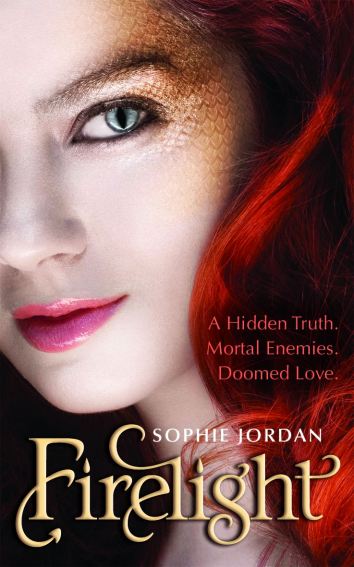
Firelight by Sophie Jordan

Plot (taken from waterstones.com)

Marked as special at an early age, Jacinda knows her every move is watched. She longs for the freedom to make her own choices, but when she breaks the 'no flying' rule, she nearly pays with her life. Until a beautiful stranger saves her. A stranger who was sent to hunt those like her. For Jacinda is a draki, a descendant of dragons whose greatest defence is her secret ability to shift into human form. And her rare ability to breathe fire makes her desirable, and important, to the survival of the draki. Forced to flee into the mortal world with her family, Jacinda struggles to adapt to her new surroundings. There she meets gorgeous, elusive Will who stirs her inner draki to life. Although she is irresistibly drawn to him, Jacinda knows Will's dark secret: he and his family are hunters. She should avoid him at all costs. But her inner draki is slipping away, and if it dies she will be left as a human forever. She'll do anything to prevent that. Even if it means getting closer to her most dangerous enemy.

Rating 5*- I treated myself to this novel when in London, Christmas shopping. This is one of the best novels I have read this year. The unique dragon mythical creatures are so different to every other supernatural story, which seems to mix between vampires and angels. I was totally gripped from the beginning and I have ordered the second instalment in the trilogy.

The main protagonist, Jacinda, is a fantastic and likeable character. Alongside Will, the two gel well together and creates a romantic side to what is perhaps quite a dark plot. Jacinda is being hunted for her special talent and being the only drake left in her family (her mother and sister cannot turn) it enables a very unique twist to what usually comes to mind when thinking of dragons.

Monday, 24 December 2012

Mystic City by Theo Lawrence

Plot (taken from waterstones.com)

Aria Rose, youngest scion of one of Mystic City's two ruling rival families, finds herself betrothed to Thomas Foster, the son of her parents' sworn enemies. The union of the two will end the generations-long political feud - and unite all those living in the Aeries, the privileged upper reaches of the city, against the banished mystics who dwell below in the Depths. But Aria doesn't remember falling in love with Thomas; in fact, she wakes one day with huge gaps in her memory. And she can't conceive why her parents would have agreed to unite with the Fosters in the first place. Only when Aria meets Hunter, a gorgeous rebel mystic from the Depths, does she start to have glimmers of recollection - and to understand that he holds the key to unlocking her past. The choices she makes can save or doom the city - including herself.

Rating 3*- This novel is a very different and original take on Shakespeare’s Romeo and Juliet. The main protagonist, Aria is a really likable character and as you see the story in the 1st person you only know as much as Aria. The suspense created by this is fantastic and gripping, however not very much seems to happen! The slow plot reveal was backed-up by the futuristic Manhattan is half submerged under water and the novel surrounds the fear of global warming.

The dark secret that her family keeps from her is constantly surrounding Aria; however I did not feel that I was totally submerged in the novel. It was a great story and plot but the characters, especially the Fosters’ and Roses’ did not entice me into the story. I am looking forward to the next instalment, but I am not sure I will run out and buy it straight away!

Thursday, 20 December 2012

New Layout

Hi again!It's been a while since I have posted, apologies!
I've been attempting a rather large pile of university work accompanied by starting my Christmas shopping. It's been a hectic month.


Don't worry though, I have not forgotten about my blog!
This post is just to tell you about my new layout. I will no longer be posting three times a week but just the once. This is due to my last year at university being demanding and getting on into the year I cannot keep up with the sheer amount of reading I need to do in order to have so many posts a week.

I will also be changing the way I review novels. I will be using a synopsis from another source, which will pretty much tell you all you need to know about the book! But this allows me more time to tell you about my actual thoughts on the novel!
Let me know what you think about the improvements and Merry Christmas!
Kate :)

Friday, 30 November 2012

Edgar Allan Poe


Edgar Allan Poe
Of course I have always been aware of Edgar Allan Poe, but I was never really interested in reading any of his works. That was until last year- when the film 'The Raven' hit cinema screens. Recently released on DVD, the Raven provoked me to read some of Poe's short stories.

The Pit and Pendulum (1843)

The pit and pendulum is one of Poe’s short stories.

An unnamed narrator opens the story by revealing that he has been sentenced to death during the time of the Inquisition (an institution of the Catholic government in the 15th/16th century Spain that persecuted all Protestants and heretical Catholics).

When the narrator reveals he has been sentenced to death he faints. When he wakes he faces complete darkness. The narrator is confused as the usual fate of the Inquisition normally takes the form of hanging.

Walking around the walls leads the narrator to think he has been captured and is being prisoned in Toledo, an Inquisition prison. When attempting to explore the tomb and see how wide it is the narrator stumbles and collapses to the ground.

Waking to water and bread the narrator continues his exploration of the tomb in complete darkness. He trips and falls again finding he is on the edge of, what he assumes, is a pit in the centre of the tomb. He finds a stone and throws it into the abyss, believing it to be quite deep- the narrator explains the pit is a function of surprise. After finding more water the narrator passes out again.

He wakes up to find the prison dimly lit, and remarks that he overestimated its size. The narrator finds he is now bound to a wooden board by a long strap wrapped around his body. Looking up the narrator sees the figure of time painted on the ceiling. Time has been made into a machine, a pendulum- which swings from the ceiling- however it is not like any ordinary pendulum. The pendulum is constructed with a razor-sharp crescent and is its descent towards him.

Rats begin to swarm up out of the pit and surround him and the food which was left out for the captive. The narrator remains hopeful as the pendulum is swinging and descending very slowly. The rats climb on top of the narrator and chew through the strap keeping him on the table. As the pendulum nears his heart and tears some of his clothing- the rats break through the strap. When he gets up the pendulum retracts the narrator is positive he is being watched…

…and that’s when the walls of the prison begin to move inwards. The narrator realises it will move him towards the pit in the centre. However, the walls stop moving inwards just as the narrator begins to fall- to his great surprise someone latches onto him and prevents him falling any further.

The French general Lasalle and his army have successfully taken over the prison in their effort to terminate the Inquisition.

The Masque of Red Death (1845)

A disease known as the Red Death plagues the fictional country where this story takes place. The Prince, Prospero, instead of mourning the plague – like many others, he instead feels hopeful. He decides to lock the gates of his palace in order to fend off the plague, ignoring the disease ravaging the land.

After several months he decides to throw a masquerade ball. For the celebration, he decorates seven rooms in his house, each having a different theme- Blue, purple, green, orange, white and violet with the final room being black. This room also contains an ebony clock, when is chimes each hour the sound is so loud that everyone stops talking and the orchestra stops playing. When the clock is not sounding the rooms are filled with people enjoying the masquerade, the black room is the only place not filled with people.

At midnight a new guest appears, dressed in a mask that looks like the face of a corpse and his garments covered in blood suggesting that he is a victim of the Red Death. The prince is angry at the guest and finally catches up to the guest in the black room. As soon as he confronts the figure the prince dies. As soon as rest of the party guests enter the room they find there is nobody underneath the costume. The entire party soon dies, for the Red Death has infiltrated the castle.

‘Darkness and decay and the Red Death’ have at last triumphed.

The Murders in the Rue Morgue

This is one of Poe’s detective fictions- the story centring on who killed Madame L’Espanaye and her daughter Mademoiselle Camille.

An unnamed narrator begins this tale of murder and criminal detection with discussion of the analytic mind. He describes the analyst as driven paradoxically by both intuition and the moral inclination to disentangle what confuses his peers. He adds that the analyst takes delight in mathematical study and in the game of checkers, which allows the calculating individual to practice the art of detection—not only of the moves integral to the game, but also the demeanor of his opponent. The narrator argues, however, that analysis is not merely ingenuity. He states that while the ingenious man may, at times, be analytic, the calculating man is, without fail, always imaginative.

The narrator describes how he met C. Auguste Dupin- both men were searching for the same book at an obscure library, in Paris. We soon see Dupin’s great understanding of the mind- as he describes what the narrator is pondering over in his mind.

Soon, thereafter the narrator and Dupin read the newspaper headlines about a horrible murder at the Rue Morgue. One night at three a.m the neighbours hear L’Espanaye and her daughter screaming from their apartment. The neighbours hear the voices of two people and then silence.

The story moves on from here, showing the newspapers witnesses and how they remember the scene of the crime. The narrator and Dupin then begin to take a look around the L’Espanaye’s apartment for clues as the police are at a loss. The two men that the witnesses heard were unable to hide the body of the daughter up the chimney as it impossible for only two men to perform such a physical task.

Dupin summarizes that no human could have performed these acts and upon summoning a sailor to the scene he learns he is right…

Learning that a sailor has lost an ape- it soon becomes clear who is responsible for the murders in the Rue Morgue.

The Oval Portrait

‘The Oval Portrait’ is a short story by Edgar Allan Poe involving the disturbing circumstances surrounding a portrait in a chateau. It is one of his shortest stories only filling two pages in its initial publication in 1842.

The tale begins with an injured narrator seeking refuge in an abandoned mansion in the Apennines- we have no explanation of his wounds. He spends his time admiring the works of art decorating the strangely- shaped room. He eventually discovers a painting which shocks him which he refers to as ‘absolute life-likeliness of expression’. He spends a moment in silent awe until he cannot bear to look at it anymore- then he consults a book which describes the paintings found in the house.

The reminder of the story is a selection from the book which discusses when it was created etc. The painting was by an eccentric artist depicting his young wife, but he grew more and more obsessed with the painting to the point he forgot about his wife’s personal needs. When he finishes the painting and looks up at his wife he discovers that she is dead and her spirit was transferred into the lifelike painting.

Wednesday, 28 November 2012

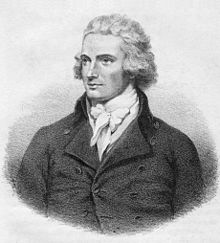
The Travels of Interior Africa by Mungo Park

Yet again, I found myself nearing Friday (my one day at university- 3 grand for one day, don’t get me started) and yet to pick up the novel for this week’s lecture. Although these books tend to have interesting covers I still judge it by the predecessors in the module! However, Mungo Park’s travels in Africa are so endearing and quirky!

PLOT
Mungo Park was an explorer, embarking on his first trip to Africa funded by the African Association in 1794. During this time Africa was still considered to be a very dangerous place for exploration and travellers. Mungo Park’s first novel describes the conditions and discovery that Mungo comes across- whilst travelling towards the Niger River.

Mungo begins by telling the readers of his journey to Africa- although he does not linger on his experience of the ship. He jumps straight into his first glimpse of Africa and the people inhabiting it.  His novel is concerned with the display of hospitality from the natives, or more prominently the lack of!

Mungo’s novel is based upon his journey and what he encounters on the way. This includes stories the natives tell him- for example the harsh truths of the West African traditions called ‘Mumbo Jumbo’. Mungo come across many dangerous exploits and becomes a hostage of the renowned ‘Moors’- however, will he escape and finish his journey?

Rating 4*- This is another novel that surprised me. The historical and cultural aspect of Mungo’s journey is fascinating and involves so much content that was first discovered on his journey.

In using his personal stories he brings his text to life- straying away from the guidelines set by other travellers of the time, he produces a very different text. Knowing this was a real journey undertaken by a lone man, it is easy to relate to the dangerous setting and Mungo is determined to not return home until he has completed his exploration.

Monday, 26 November 2012

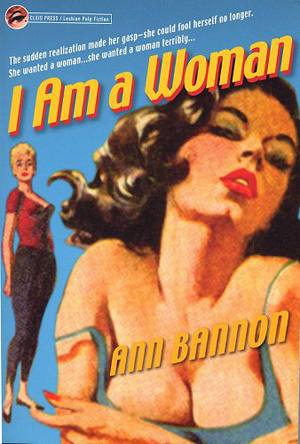
I Am a Woman by Ann Bannon

This is another of the novels that was on my reading list over summer, unfortunately I read nothing but Stephen King and young adult novels (it’s great getting to read what you want). So I was sat on the train back to University wondering how on earth I was going to read 232 pages in in less than 3 hours. However, to my surprise the reading list this year has become more and more enjoyable! I finished the novel in less than the 3 hours and ordered the other two books in the series on amazon!

PLOT

‘I am a Woman’ is a lesbian pulp fiction novel written in 1959. It is the second in a series known as ‘The Beebo Brinker Chronicles’. The story begins with the main character, Laura Landon- a year after she has left college. She is living with her unkind and harsh judging father as he perceives that she dropped out of college because she was failing. Unable to put up with her father any longer, Laura packs and leaves her home in the middle of the night and goes to New York.

She soon finds a job as a secretary and lands herself an apartment with a roommate- Marcie. Marcie is young, beautiful and impulsive and Laura moves into the Greenwich Village apartment looking forward to getting to know her new roommate.

Marcie constantly fights with her ex-husband Burr, who is often at the girl’s apartment. Laura begins to intensely hate Burr after the numerous fights she over hears- and recognises she is jealous of Burr because of her own attraction to Marcie. However, Burr introduces one of the most important people to Laura- Jack Mann. Jack and Burr take the girls on a double date, where Jack takes them to a gay bar. Jack is clearly an alcoholic and often gets drunk, but he is a good natured man whom Laura finds to become the closest friend she has in New York.

Will Laura hide her feelings from Marcie forever? Will Laura realise who she really is? Running away from home was never going to be the hardest decision; Laura is left more confused than ever in New York City.

Rating 5*- I was unable to put this book down, luckily for me I had a deadline to read it for, however this book totally passed my expectations. Ann Bannon was a revolutionary writer and ‘I am a Woman’ is innovative and riveting, displaying what life was like in New York around this time. In the 50’s and 60’s many pulp fiction novels did pop up and with this so did the interest in Greenwich Village in New York. The novel inspired many young men and women to travel to the coast and experience what life could be life for them. The American government being a right wing party endeavoured that many people were socially withdrawn and unaccepted in their own society- but these books helped bring to light the entire community of gay and lesbian individuals on the West Coast.

Not only is the historical value of this novel interesting, but the characters themselves are likable and entertaining. The novel is fast paced and is impossible to put down- I was determined to see what happened to Laura and the plot twists are totally unexpected. This novel is uncharacteristic of all the expectations I held of it- although its front cover should have given it away! Well worth each of the five *’s I give it, in this review.

Friday, 23 November 2012

Just Like Heaven by Julia Quinn

PLOT
Julia Quinn writes historical romance novels and has received a number of RITA’s for the best regency historical romance. ‘Just Like Heaven’ is the first book in the series ‘The Smythe-Smith Quartet’. Honoria Smythe-Smith is the youngest daughter of the eldest son of the Earl of Winstead. Honoria is still single and knows she must marry in order to escape her family orchestra quartet. She is aware that they are dreadful and freely admitts that she thinks she is the worst of them all!  

Marcus Holroyd, is Honoria’s brothers best friend, however Daniel lives in exile out of the country leaving Marcus to look over his family. However, once he learns that Honoria is determined to marry by the end of the season- he knows he needs to take extreme caution when allowing her to pick an honourable husband.    

Will Marcus be able to swoop in and steal her heart before the end of the season?

Rating 3*- It is the first time I’ve read an historical novel and this book surprised me! Julia gives a good insight into the Regency period and her characters portray the period very well. Honoria is what you would typically expect from a character; however both she and Marcus surprised me throughout the novel. They are, on the outside, as reserved as expected, but Quinn uses internal monologues which delve into Honoria’s and Marcus’ thoughts. The interchanging chapters switch between the two characters giving the readers to chance to get to know each character on a more personal level.

Although I have not given the book the highest of stars, the main enjoyment I got from this novel was from Quinn’s humour. Very subtle and hilariously placed, Quinn is  a great and entertaining writer. While it was not the most of gripping of reads, I finished the novel and the humours aspect made it all the more enjoyable!

Wednesday, 21 November 2012

Orlando by Virginia Woolf

This book has been on my reading list over the summer- for returning to university. I have read a couple of Virginia’s books- and I expected this to be on the same wavelength. Woolf’s books are heavy and difficult to just pick up and read. However, Orlando is the complete opposite. This is by far the most enjoyable novel I have read by Woolf and the easiest!


PLOT
Orlando begins the story a boy, progressing into manhood. He lives in London during the reign of Elizabeth I. He is briefly a lover to the queen who is growing ill with age- a poignant line in the novel occurs when she tells Orlando to never grow old. After the queen’s death Orlando finds a new love interest, in a Russian princess, Sasha. However, after the ice in London melts Sasha disappears leaving Orlando heartbroken. He begins an isolated life at this stage and takes up writing, poetry specifically.

The second stage of Orlando’s life begins in Constantinople, where he serves as a British ambassador. However, after a night of civil unrest and riots, Orlando falls into a deep sleep. After days of sleep Orlando eventually awakens as a woman.
Now, Lady Orlando, leaves Constantinople in order to begin a new life as a female. On a ship back to England she realises how much changes with her change of sex, the list of things she cannot or must not do, she never even considered when she was male.
Orlando experiences life, as a woman in the 18thand 19th centuries, with a number of new friends and acquaintances. Finally, after winning the lawsuit over her property (being a woman meant her inheritance of her mansion was in jeopardy) she marries Captain Marmaduke Bonthrop Shelmerdine. Finally in 1928 Orlando publishes her poem she started at the beginning of the novel- The Oak Tree.

Rating 4*- It is interesting to see how Woolf’s style changes so much when she wrote a novel she considered as a ‘break from writing’. This is a quirky and fun read-something I was not first expecting! Having read a number of novels by Woolf, including‘A Room of One’s Own’ and ‘Mrs Dalloway’, this is by far the best read.

If you are looking for something a little different and historical this is definitely worth a read! The history through the eyes of a man changing into woman is so fascinating, especially in Virginia Woolf’s written style. I really cannot recommend this book enough, well worth giving it a go!
If you think this book is a little too heavy- watch Sally Potter’s version of Orlando. Tilda Swinton takes the role of Orlando in a unusual adaptation!

Monday, 19 November 2012

Maid for the Billionaire by Ruth Cardello

I have usually heard about all the novels I read before I read them- whether they are recommended by a friend or are simply in the book chart I am not the type of person to just buy anything!

However, after my old phone decided to pack up I decided to go for an iPhone! After messing about for hours getting new apps and installing quirky features I came across iBooks! I downloaded any books or sample chapters that were free. This led me to this week’s book which was in free for the full version!
PLOT
It was only 200 or so pages long and the plot is not complicated but simple and for an easy read.
School teacher, Abby meets billionaire Dom, when cleaning his apartment in Boston, which she is covering for her sister. From the off the sexual tension is high, after inviting her to accompany him to a meeting the following day – Abby decides to live life on the wild side for once.
After the following day, Abby finds herself in China’s capital, Beijing. Dom decides if he can’t stay in Boston with her she must accompany him to his business meetings.
Will Dom risk his business to win Abby over? Or will his business prove to be more important that pleasure?

Rating 2*- Very cheesy- you have got to be in a mood where you will cringe at the very romantic, (maybe tacky is a better word) and unrealistic ending. I have to admit though, I did enjoy this book, although I think that was partly because it was free, but also because of all the hard hitting horror novels I have been reading recently. This novel presented an idealist world where you would never have to worry about money. Essentially this is just another Fifty Shades novel- which, although is not as graphic, hits the spot (pardon the pun) when you want a light romantic read!

It is part of a trilogy (most books seem to be today) and sadly the other novels that follow are not free. Needless to say, I don’t think I shall be purchasing them.

Friday, 16 November 2012

The Mist by Stephen King

‘Stephen King is one of the bestselling writers in the world. A master of the short narrative form, King knows how to write stories that draw you in and are impossible to put down. His story collections have been described in the Sunday Telegraph as mysterious, gripping and satisfyingly scary.’
‘A short story is a different thing altogether – a short story is like a quick kiss in the dark from a stranger. That is not, of course, the same thing as an affair or a marriage, but kisses can be sweet, and their brevity forms their own attraction’ Stephen King.


PLOT
‘The Mist’ is a horror novella and has recently been adapted into a major movie. Written in 1980, it was not until 2007 that his short story was turned into a film- however King’s short narratives have always proved to be best sellers!

‘The Mist’- like the majority of King’s novellas- is set in Maine. King introduces us to the landscape and beauty of Maine, first the lake house and setting is described following Billy, his father (David) and mother (Steffi).
The formidable first sentence sets the scene of horror that is to continue …
‘This is what happened. On the night that the worst heat wave in northern New England history finally broke- the night of July 19 – the entire western Maine region was lashed with the most vicious thunderstorms I have ever seen’.
King’s style and form never fails to hook his readers- directing his story from the first line he invites his audience to immerse themselves into his very realistic stories…

Rating 5* -King captured my attention from the very first line. Finishing the novella in a few short hours I could not put it down! I have never seen the film adaptation but I had a very realistic image of the white mist finding its way through my bedroom window…

n Stephen King’s words… ‘Welcome aboard. Enjoy the ride.’

Wednesday, 14 November 2012

The Running Man by Stephen King

As you can probably tell by now, I love Stephen King. Although I am trying to limit the amount I review in a short space of time, The Running Man is just too good to keep to myself!

PLOT

Written under the pseudonym of Richard Bachman, The Running Man is a science fiction novel set in dystopian America. During the year of 2025 the nation is in ruins, split between the rich and poor.

Ben Richards is a citizen of Co-op city, the poor side of the town. Richard’s is unemployed and he is in desperate need of money, his daughter Cathy, needs medicine for her illness. In his desperation Ben resorts to the Games Network. The network offers people money in exchange for their participation on one of their many popular reality TV shows.

After a rigorous health and mental examination Richards is accepting onto ‘The Running Man’, the most dangerous and popular programme on TV.

Richards must run for his life. The rich people of the cities in American watch out for Richards in their towns and neighbour hoods he must keep off the radar- and away from the hunters.

The aim of the game? To stay alive for 30 days. The purpose of the hunters? To kill.


RATING 5* - Stephen King really had me hooked from page one. The chapters start off a count down and even in the small 241 pages that this book holds, there is so many twists and unexpected plot divisions.

Stephen King is renowned for the suspense in his novels, but The Running Man takes this to another level. As the whole nation watches Richards on the run- the reality of 2025 in America is a possibility. King investigates the prospects of what life will really be like in future.

Monday, 12 November 2012

White Noise by Don Delillo

This week’s review was a novel I read in my first year of university, although they do give me books I both love and hate- this is one of my favourites. Not to be confused with the film ‘White Noise’, this novel is not  terrifying as the film!
White Noise is the eighth novel by Don Delillo and was published in 1985. White Noise is considered as Delillo’s ‘breakout’ work as it brought him a larger audience. The Time has included him in their ‘100 Best English-Language Novels from 1923-2005’. It also won the ‘US National Book Award for Fiction’.
 
PLOT
The novel’s protagonist Jack Gladney is a professor of Hitler studies and the plot follows the life of Gladney family, which includes Henirich, Denise, Steffie, Wilder and his current wife, Babette. The first part of White Noise is called ‘Waves and Radiation’ where the novel follows the contemporary family life, which mainly serves to introduce the characters that lead the rest of the novel. Another key character introduced, outside of family life, is Murray who links his theories to the themes in the second half of the novel.
The second part is titled ‘The Airborne Toxic Event’, which follows the family’s lifestyle after a chemical spill near their neighbourhood. Faced with his exposure to the toxic event, Gladney is confronted by his fear of death.
The final part of the novel- ‘Dylarama’ follows Gladney’s discovery that his wife, Babette had been cheating on him, in order to acquire a fictional drug called Dylar. This is revealed later on, to be an experimental drug treatment for the fear of death. Gladney continues to obsess over death, until Murray suggests a hypothesis that killing someone could perhaps alleviate this fear…
However will Gladney go as far as killing someone to cure his own fear of mortality?
Rating 4* -The first part of the novel seems to be slow moving with little plot development; however the second and third part of the novel relate to the everyday fear that the human being is surrounded by danger.  The novel focuses on the lives of an ‘ordinary’ family, which is easily relatable. This postmodern novel makes you think and question the type of world we live in and the life we take for granted…
 

Friday, 9 November 2012

The Sun Also Rises by Ernest Hemmingway

‘The Sun Also Rises’ was Ernest Hemmingway’s first novel, published in 1926. Hemmingway was born in Illinois in 1899 and his work was considered to have a strong influence on 20th century fiction.

Hemmingway began writing the novel on his birthday in 1925 and his first manuscript was finished two months after this, in September. The basis for the novel was on Hemmingway’s trip to Spain in 1925. Although the novel also visits Paris, the settings described in the novel are memorable, possibly based upon Hemmingway’s experience of living in Paris- when he was a young writer himself

PLOT

The main storyline follows a group of American and British expatriates, who travel from Paris to the Festival of San Fermín in Pamplona, to watch the running of the bulls and the bullfights. This was an early modernist novel and received mixed reviews upon its publication.

The novel follows an underlying love story between Jake Barnes, the protagonist- and Lady Brett Ashley, a divorcée. Brett’s affair with Jake’s friend Robert Cohn upsets the protagonist and their friendship is broken off. Brett continues a long set of affairs with her seduction of Romero, a bullfighter- whom Jake introduces Brett to whilst they are in Pamplona for the fiesta. This leads Jake to lose his good reputation whilst he is in Spain and once the fiesta is over the characters finally take off on their own journeys. Jake begins to regret turning down Bill’s invitation to join him when he receives a telegram from Brett, telling him she is in trouble and to meet her in Madrid. The novel comes to an end when Jake finds that Lady Ashley has sent Romero away. The novel ends with a sense of dѐjà vu from the beginning as Brett and Jake get into a taxi and Jake finally gets to put his arm around Brett once again.

Rating 4*- This was the first Hemmingway novel that I have read so I did have high expectations. The novel was not quite what I expected although it was thoroughly engaging- the bullfights and fiesta in Spain being an exciting highlight of the book. The descriptions of the café’s around Paris and wine shops in Pamplona created an atmosphere and culture which added to the novels plot.

I was expecting the novel to have slow moving chapters but as soon as I read the first page I was hooked! Definitely worth a read, this novel has underlying gender topics- as Brett is described her feminine aspects are rarely mentioned she is shown to have more masculine features and always enters the scenes with her line ‘hello chaps’. Brett is by far one of the most interesting characters to pay close attention to when reading this novel.

Wednesday, 7 November 2012

Bared to You by Sylvia Day

‘If you enjoyed Fifty Shades of Grey you’ll love Bared to You’

‘Bared to You’ was declared Penguin Book’s fastest selling paperback of the decade
 
PLOT

Replace Ana for Eva and Christian for Gideon and you’ve got ‘Bared to You’ in a nut shell.

Gideon is a self-made millionaire and bachelor living in New York. When he meets Eva he soon learns he is not the only one who has commitment issues- and although Eva wants more, her past is holding her back.

As the beautiful and brilliant Gideon attempts to wow Eva, he realises he steps over a line he was unwilling to cross… can he and Eva get over their mysterious pasts and move on together?

This is the first novel in a trilogy by Sylvia Day, with the final Crossfire novels titled ‘Reflected to You’ and ‘Entwined with You’ –which are due to be realised in the future.

Rating 3* -Compared to ‘Fifty Shades’ the novel’s style is more sophisticated. The writing style is not quite as repetitive as E.L James- although it does have some aspects which are very alike. The tag line ‘if you enjoyed fifty…’ is very true. ‘Bared to You’ very similar, in fact it has the exact same story line- minus and adding a few details.

I did enjoy the novel, it was a better read than ‘Fifty Shades’, however I wasn’t prepared for it to be exactly the same. I have a feeling this genre has run its course and it won’t be until the film adaptation of ‘Fifty’ comes out for the hype to return.